Alternative InsiderResearch
Free 12-page brief

Congress banned a Federal Reserve digital dollar. It left private dollar tokens with a built-in freeze requirement.

Treasury expects the licensing regime to take effect January 18, 2027.

By requesting this report, you will also receive complimentary access to The Bear Case and Alternative Insider News, including market commentary, research, special reports, and occasional promotional messages. You may unsubscribe at any time. Privacy Policy | Terms.

Free Arrives in about 15 minutes, check Promotions if it is not in your inbox Includes The Bear Case and Alternative Insider News Unsubscribe anytime
The Back Door, September 2026 research brief

The freeze that needed no court order

In February 2022, Canadian financial service providers were required to freeze accounts without a court order. Around 280 financial products were frozen, about $8 million in total, including $3.8 million sitting with a payment service provider. The providers acted largely on information supplied by the RCMP.

Nothing was seized. An instruction was issued and institutions complied, because every account sits on rails somebody else operates.

That was one country, acting once, on old infrastructure.

Most people assume the American version of this story is about a digital dollar, and that the question is whether one arrives. It already got answered. On July 11, 2026, a four-year prohibition on a Federal Reserve digital currency became law. The Fed cannot issue one, or anything substantially similar, through the end of 2030.

A reader who stopped there would conclude the matter was closed. The same Congress had already answered it differently.

The GENIUS Act requires that a stablecoin issuer may issue only if it “has the technological capability to comply, and will comply, with the terms of any lawful order.” A lawful order is defined in the statute as one requiring a person to seize, freeze, burn, or prevent the transfer of the stablecoins they issued.

In Ottawa, that capability had to be improvised. Under this framework it is a condition of holding a licence.
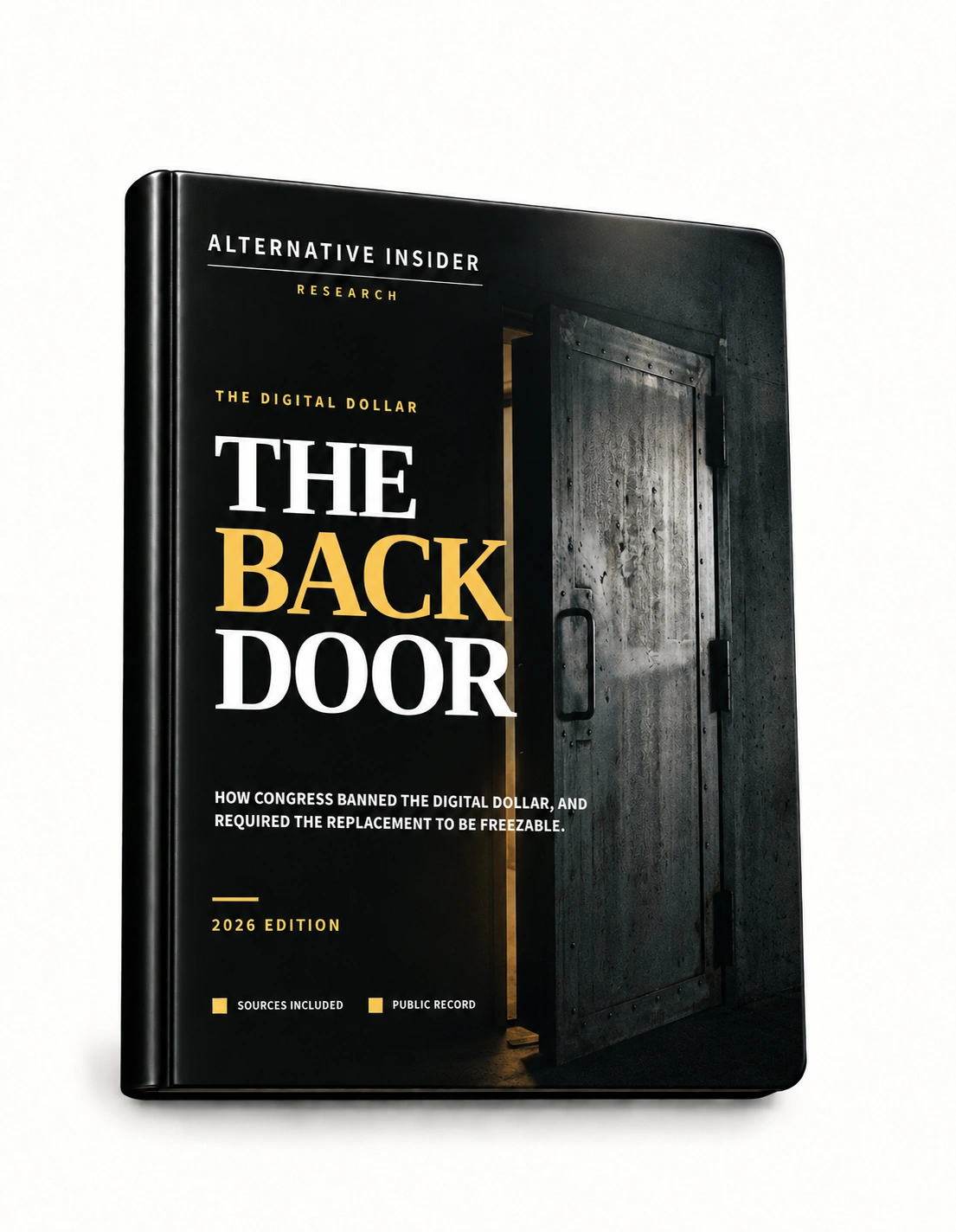
What's inside the brief

Three dates behind the brief

Statutes and proposed rules are different kinds of evidence. Each date below is tied to a published document.

July 11, 2026
The day a four-year prohibition on a Federal Reserve digital currency became law, running through the end of 2030
June 18, 2026
The day five federal agencies proposed attaching customer identity requirements to permitted stablecoin issuers
January 18, 2027
Treasury's stated expected effective date for the GENIUS Act licensing regime

Twelve pages on what was banned, what was built, and what comes next

Every claim sourced to a statute, a Federal Register notice, a Federal Reserve statement or sworn parliamentary testimony.

It does not predict a collapse, it does not name an investment, and nothing in it requires taking anyone's word for anything.

By requesting this report, you will also receive complimentary access to The Bear Case and Alternative Insider News, including market commentary, research, special reports, and occasional promotional messages. You may unsubscribe at any time. Privacy Policy | Terms.

The brief ends on a decision that moves responsibility onto the person making it. If that sounds like more responsibility than you want, the brief will tell you so directly.