|
||||||||||||||||||||||
|
||||||||||||||||||||||
Presented by

|
||||||||||||||||||||||
|
Learn how everyday Americans are quietly earning 10%-20% on their cash - using the same treasury backed play the banks use on you. Watch the free training → |
||||||||||||||||||||||
|
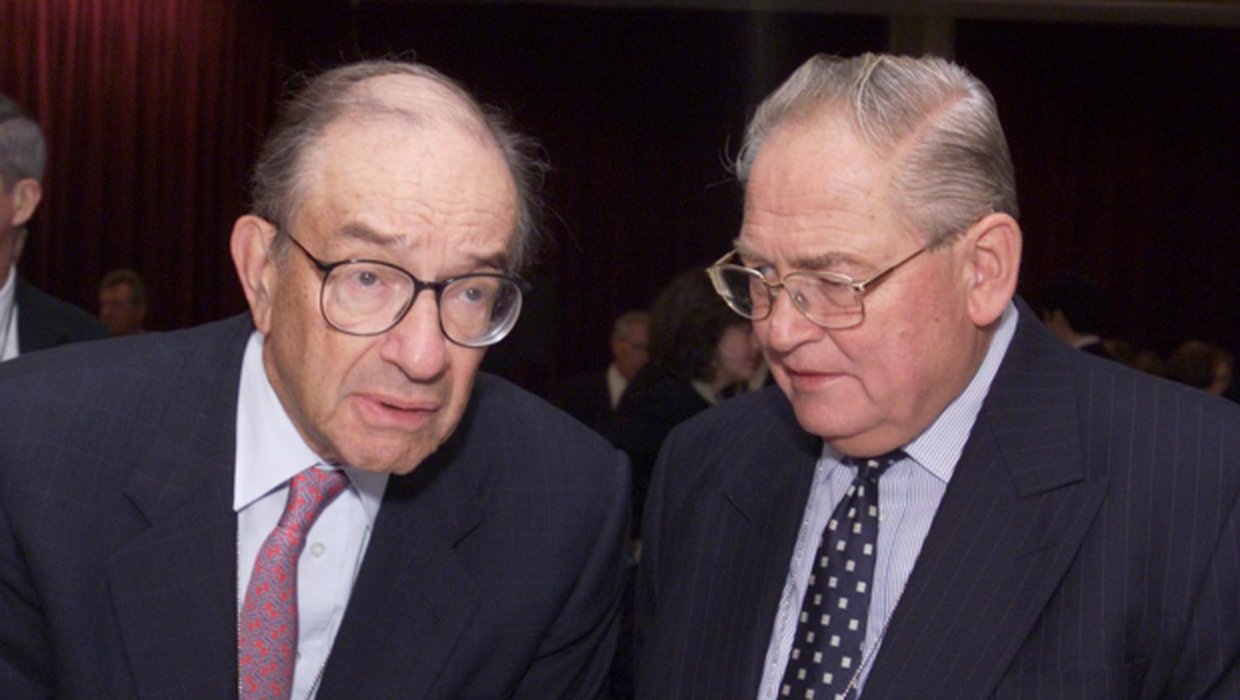
Alan Greenspan died this week at 100 years old. The man who ran the Federal Reserve for 18 years, coined the phrase "irrational exuberance," and presided over the longest economic expansion in US history left behind a monetary system that looks nothing like the one he inherited. That gap is worth understanding. And separately: two years ago Saudi Arabia quietly let the petrodollar agreement expire. Nobody outside of financial circles noticed. The Iran war changed that. Right now, in real time, the consequences of that 2024 decision are reshaping how oil gets priced, what currencies matter, and why gold and alternative assets are being taken seriously by people who spent decades dismissing them. Good morning. Two genuinely important stories this week. Let's get into them. |
||||||||||||||||||||||
Gold is down nearly 5% this week as the dollar strengthened sharply on Fed rate hike expectations. Deutsche Bank and BofA both moved their September hike forecasts into their base case after Warsh's hawkish first FOMC meeting. The DXY at 101 is the highest it's been since February, and gold trading against dollar strength is the dominant dynamic right now. The structural bull case is intact. The trade is just expensive in the short term. Silver is down 11.5%, the worst performer on the board this week. Silver amplifies gold's moves in both directions, and the combination of dollar strength and easing oil prices hit industrial metals sentiment hard. The sixth consecutive annual supply deficit hasn't gone anywhere. Neither has the solar and EV demand story. This is a macro headwind, not a structural reversal. Oil is at $73, its lowest since before the Iran conflict started. The Iran peace process, 60-day oil sales license, and Gulf producers ramping output are all hitting simultaneously. Kuwait lifted its force majeure. ADNOC resumed supply operations. Iran shipped 30 million barrels through Hormuz last week. The war premium that took oil from $65 to $115 is almost entirely gone. |
||||||||||||||||||||||
🏛️ Alan Greenspan is gone. The system he built is starting to crack.By The Alternative Insider Research Team
Alan Greenspan died this week at 100. He served as Federal Reserve chairman from 1987 to 2006, longer than anyone since the post was created. He steered the economy through Black Monday, the dot-com bubble, the September 11 attacks, and the early stages of the housing boom that would eventually collapse two years after he left. His tenure ended with a $900 billion Fed balance sheet and interest rates at 5.25%. His legacy ended with a $7.7 trillion balance sheet and rates near zero. He didn't cause all of that directly. But he built the intellectual framework that made it possible. Here's what most obituaries won't tell you: Greenspan started his career as a genuine gold standard advocate. In 1966, before he ever worked for the government, he published an essay called "Gold and Economic Freedom" arguing that the gold standard was the only monetary system compatible with individual liberty, that central banking was inherently inflationary, and that paper currency without gold backing would eventually destroy savings. It's one of the clearest defenses of hard money ever written by someone who would later spend 18 years managing the very system he criticized. What changed By the time Greenspan became Fed chair, he had mostly stopped talking about gold. He managed the dollar with a light touch, kept inflation low through the 1990s, and earned the title "The Maestro" from a press corps that believed he had solved the business cycle. When the dot-com bubble inflated and then burst, he cut rates aggressively. When 9/11 happened, he cut them further. The housing market ran hot on cheap money throughout the 2000s, and when someone in Congress asked him in 2005 whether he was worried about a potential housing bubble, he said he didn't see one. Three years later, in 2008 Congressional testimony, Greenspan admitted he had found "a flaw" in his model. The man who once wrote that free markets were self-correcting and that gold was the only honest money sat before Congress and said the intellectual framework he'd operated under for decades had turned out to be wrong. What came after Greenspan, first Bernanke, then Yellen, then Powell, was increasingly aggressive. Quantitative easing. Zero interest rate policy. A Fed balance sheet that went from $900 billion to nearly $9 trillion at its peak. The 2020-2021 money printing that produced the worst inflation in 40 years. Each step was justified by the framework Greenspan's successors inherited. And Greenspan himself, in his later years, quietly returned to gold. He told the Council on Foreign Relations in 2014 that gold was a "good place to put money these days given its value as a currency outside the policies of governments." The man who helped build the modern fiat system spent his final decade recommending the asset that predates it. Why this week matters Greenspan dies the week gold is selling off on rate hike fears, the week the petrodollar consequences are becoming visible in oil markets, and the week the Fed Greenspan built is debating whether to raise rates into a war-stressed economy with $36 trillion in national debt. The intellectual edifice he constructed, trust the central bank, trust the dollar, trust the system, is being questioned more seriously than at any point since he wrote that 1966 essay. The irony is that the investors who took his original 1966 argument most seriously, the ones who kept gold as a core holding and treated dollar debasement as a structural inevitability rather than a political talking point, have been right about most of it. The ones who listened to his later Maestro persona, who trusted the Fed to manage everything competently, have spent the last 15 years living with the consequences of that trust.
|
||||||||||||||||||||||
|
||||||||||||||||||||||
🛢️ The petrodollar died in 2024. The Iran war is just when everyone noticed.
On June 9, 2024, a 50-year agreement between the United States and Saudi Arabia quietly expired. The Saudis decided not to renew it. There was no press conference, no formal announcement, no crisis. The financial press ran a few pieces and moved on. Most investors never heard about it. The agreement, struck in 1974 between Henry Kissinger and Saudi Prince Fahd, was the architecture behind 50 years of dollar dominance. Saudi Arabia agreed to price all its oil in US dollars and recycle those dollars into US Treasury bonds. In exchange, the US provided military protection and security guarantees. Every country that needed Saudi oil needed dollars first. That structural demand for dollars is what kept the currency dominant even as the US ran persistent deficits and printed money. The petrodollar wasn't just a currency arrangement. It was the load-bearing wall of the post-Bretton Woods financial system. Two years after the agreement expired, the Iran war broke out and suddenly the consequences of that 2024 decision became visible. Saudi Arabia joined mBridge, China's cross-border CBDC platform. Gulf nations started settling oil trades in yuan. The dollar's share of global foreign exchange reserves, already down from 71% in 1999 to 57% today, accelerated its decline. China had been consuming 15-16 million barrels of oil per day and had been building the infrastructure to pay for it in yuan since 2018 when it launched the Shanghai International Energy Exchange. The groundwork was years in the making. The Iran conflict just lit the fuse. Here's what it means practically. The US has been able to run $1-2 trillion annual deficits partly because the rest of the world needed dollars to buy oil and stored those dollars in Treasury bonds. As that structural demand softens, the US has to offer higher yields to attract buyers for its debt or the Fed has to buy the bonds itself, which means printing money. Neither option is good for the dollar's purchasing power. Both are good for gold over any multi-year horizon. Gold falling this week on rate hike fears is a short-term trade. The petrodollar story is a decade-long structural shift that was already two years old before most people heard about it. Those two things are happening in the same week for a reason. |
||||||||||||||||||||||
|
||||||||||||||||||||||
|
||||||||||||||||||||||
|
||||||||||||||||||||||
|
||||||||||||||||||||||
|
||||||||||||||||||||||
|
Disclaimer: Alternative Insider News is a financial education and research publication. Nothing in this email constitutes investment advice, financial advice, or a recommendation to buy or sell any security or digital asset. We may earn affiliate commissions from partners mentioned in this newsletter. Always do your own due diligence before making any investment decision. Past performance is not indicative of future results. Cryptocurrency investments involve significant risk and may result in loss of capital. |