|
||||||||||||||||||||||
|
||||||||||||||||||||||
Presented by

|
||||||||||||||||||||||
|
The 115-year system designed to control your money just entered its final phase (and the legal "back door" investors are using to escape it). Watch the free training → |
||||||||||||||||||||||
|
Bitcoin posted its best week in months, up roughly 18%, after the White House hosted crypto leaders and urged Congress to pass the Clarity Act. The short squeeze that powered it, $1.74 billion in forced liquidations in 24 hours, is worth understanding separately from the regulatory catalyst that triggered it. The two are not the same trade. This Friday, Kevin Warsh delivers his first Jackson Hole keynote. He called the speech a blank page in July. The symposium theme is "Financial Innovation and Policy", the first time digital payments has anchored the annual Fed gathering in its history. Warsh held positions across more than a dozen blockchain protocols before divesting upon confirmation. Whatever he says Friday will move every asset in this table. Good morning. The week that decides September. |
||||||||||||||||||||||
Bitcoin up 18% in a week is the obvious headline, but the mechanism underneath it matters more than the number. Last Friday's rally came with $1.74 billion in short liquidations in 24 hours, forced buying from traders who had bet against Bitcoin and got squeezed out simultaneously. Layered on top: $189 million in net ETF inflows led by BlackRock's IBIT. Two different buyers, two different motivations, same direction. Ethereum did better still, up almost 28% and outrunning Bitcoin for the first time this cycle. The White House crypto summit added narrative fuel but didn't create the price move, the positioning did. Gold is up nearly 7% on the week, extending its rebound from the second-quarter slump. The dollar at 99.00 is doing heavy lifting, gold priced in euros, yen, and yuan just became cheaper for every non-US buyer simultaneously. The 30-year Treasury hit 5.19% earlier this week before Treasury raised the buyback cap to at least $4 billion starting September 9, which pulled yields down and sent the dollar sliding. Gold and Bitcoin moved together this week for the first time in months. Their rolling correlation had dropped to -0.88 in spring. Something may be shifting. Oil is up 8% on the week and that is the number in this table nobody is talking about. The ceasefire remains deadlocked, the strait is still functionally restricted, and WTI is back near $85 with Brent above $90. Goldman's $120 scenario requires sustained full closure, so this is not that. But an energy input climbing 8% in the week before a Fed chair speaks about inflation is a complication Warsh did not need. Cooling inflation data measures a quarter that ended before this move. |
||||||||||||||||||||||
Warsh called his Jackson Hole speech a blank page. That's the most important thing the Fed has said all year.By The Alternative Insider Research Team
Kevin Warsh delivers his first Jackson Hole keynote this Friday at 10am ET. Three weeks before the September 16 FOMC meeting, with rate hike odds sitting at roughly one-in-three, this is the last significant policy signal before the most consequential Fed decision of the year. Every trading desk on Wall Street is watching. Every word will be read against a backdrop of softening economic data, a still-elevated oil price, and a crypto market that just moved 18% in a week partly because the White House wants Congress to pass a bill named after the town where Warsh is about to speak. When reporters asked Warsh about the speech following the July FOMC meeting, he said it was "a blank piece of paper right now." That's an unusually candid admission for a Fed chair. It tells you two things: he hasn't locked in a policy direction, and he's not going to give the market the forward guidance it's asking for. The blankness itself is the signal. Why this Jackson Hole is different The 2026 symposium theme is "Financial Innovation and Policy." It's the first time in the gathering's history that digital payments sits at its organizing center. This isn't cosmetic. The Kansas City Fed chose that theme knowing that stablecoins now have their first federal regulatory framework under the GENIUS Act, that major US banks are positioning to issue dollar-pegged tokens, and that the new Fed chair himself disclosed holdings across more than a dozen blockchain protocols before divesting upon his Senate confirmation. Warsh has appointed a prominent Bitcoin and crypto venture investor to co-lead his AI and productivity task force. Any language Warsh uses Friday about digital asset regulatory direction, CBDC frameworks, or how the Fed views programmable money could move crypto markets on policy content, not just on rate expectations. That's a different kind of Jackson Hole risk than markets have priced for. The consensus expectation, per a Bank of America survey of fund managers, is a neutral tone, neither hawkish nor dovish on rates. Sixty-nine percent expect him to thread the needle and say nothing that forces a September repricing. The other 31% are either bracing for hawkishness or hoping for a Powell-style pivot signal. The data Warsh is reading this week Three pieces of data arrive before Warsh speaks. Wednesday's Q2 GDP revision tells him how much the economy actually grew in the spring. Wednesday also brings the July core PCE price index, the Fed's preferred inflation measure. And the August flash PMI composite printed 56.0 last week, a 52-month high, suggesting the economy is not in the contraction that the payrolls data implied. Warsh is walking into Jackson Hole with flatly contradictory signals: a contracting labor market, a multi-year-high manufacturing index, cooling inflation, and Brent crude above $90. The blank page framing starts to make more sense the more you look at the underlying data.
|
||||||||||||||||||||||
|
||||||||||||||||||||||
Bitcoin miners spent two months underwater. The smart ones stopped waiting for the price to save them.
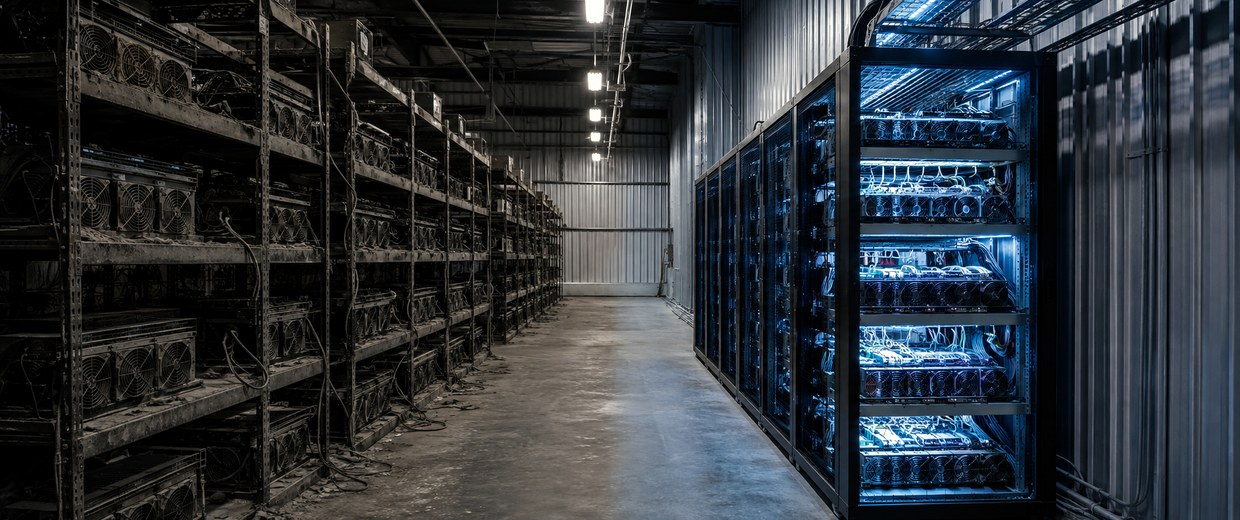
JPMorgan estimated last week that the average production cost for publicly traded Bitcoin mining companies is $78,000 per coin. After an 18% week, Bitcoin is trading around $77,000. The infrastructure layer of the Bitcoin ecosystem has spent most of the past two months losing money on every coin it produced, and last week's rally did not fix that. It moved the industry from underwater to roughly breakeven. That is a fragile place to be sitting three days before a Jackson Hole keynote. Network difficulty retargeted to 125.81 trillion this week, with hashrate fluctuating between 800 and 950 exahashes per second. Both figures are near all-time highs, meaning the mining industry built out enormous capacity during the bull run and then ran that capacity at a loss for most of the summer. BitFuFu, one of the larger cloud mining operations, reported revenue down 62.9% year-over-year in Q2, a $20.5 million net loss, and negative adjusted EBITDA. The mining business model, as it existed during the 2021 and 2023 cycles, doesn't work at current prices and current difficulty. What's happening in response is the part nobody is pricing. The same physical infrastructure that mines Bitcoin, large-scale power facilities, advanced cooling systems, high-density rack deployments, turns out to be exactly what AI data centers need. HIVE Digital Technologies, a publicly traded miner, secured a five-year, $350 million cloud services agreement last week through its BUZZ HPC subsidiary, deploying NVIDIA Blackwell Ultra GPUs at its hydroelectric facility in British Columbia. That single contract adds $70 million in annualized revenue and brings total contracted revenue to $180 million by Q4. HIVE is not alone. Core Scientific, Bit Digital, and several other mining operators have been quietly converting floor space from Bitcoin ASICs to NVIDIA GPUs for the past six months. The economics make the transition rational: AI compute is selling at a premium that mining isn't, the power infrastructure is already paid for, and the customer base for HPC contracts is entirely separate from the crypto price cycle. A Bitcoin miner that converts 30% of its capacity to AI compute has effectively de-risked itself against Bitcoin price downturns while maintaining upside exposure to BTC appreciation. The historical bifurcation JPMorgan is describing isn't a crisis. It's a shakeout. The miners who built for one cycle and can't adapt will face distress. The ones who understand that they own power infrastructure and cooling capacity, not just Bitcoin printing machines, are quietly becoming some of the most interesting companies in the AI buildout. The specialist mining press is the only place this story is being told right now. By the time it reaches the front page, the repricing will already have happened. |
||||||||||||||||||||||
|
||||||||||||||||||||||
|
||||||||||||||||||||||
|
||||||||||||||||||||||
|
||||||||||||||||||||||
|
||||||||||||||||||||||
|
Disclaimer: Alternative Insider News is a financial education and research publication. Nothing in this email constitutes investment advice, financial advice, or a recommendation to buy or sell any security or digital asset. We may earn affiliate commissions from partners mentioned in this newsletter. Always do your own due diligence before making any investment decision. Past performance is not indicative of future results. Cryptocurrency investments involve significant risk and may result in loss of capital. |